





Over the past decade, artificial intelligence has shifted from experimental research to practical enterprise infrastructure. Today, organizations are no longer asking whether AI matters; they are asking where it produces measurable business value. This shift has placed strong attention on AI ML use cases in business that generate clear operational efficiency, revenue growth, or cost reduction.
Many companies initially adopted AI as a trend-driven initiative. However, real enterprise adoption now focuses on measurable outcomes such as predictive analytics, intelligent automation, and data-driven decision support. These applications are embedded directly into enterprise apps, analytics systems, and operational platforms.
Understanding the most effective AI ML use cases in business helps leaders prioritize investments that deliver tangible ROI rather than experimental technology spending. Machine learning models integrated into business applications can automate decisions, improve forecasting accuracy, and uncover patterns invisible to human analysts.
This guide explores seven major categories where AI and machine learning are transforming enterprise software systems and delivering measurable return on investment. Each section explains practical implementation scenarios and the operational benefits organizations experience when deploying AI in enterprise applications.
1️. Predictive Analytics for Business Forecasting
One of the most impactful AI ML use cases in business is predictive analytics. Machine learning models analyze historical data to forecast future outcomes, enabling organizations to make proactive decisions rather than reactive ones.
Traditional forecasting often relies on spreadsheets or static statistical models. Machine learning systems, however, continuously learn from incoming data and adjust predictions dynamically. Businesses use predictive analytics in areas such as demand forecasting, revenue projections, supply chain planning, and financial risk modeling.
For example, retail enterprises deploy machine learning algorithms to analyze seasonal buying patterns, marketing performance, and customer demographics. These models generate demand predictions that help optimize inventory management and prevent stock shortages.
Mini Scenario:
A global retail company implemented predictive demand forecasting using machine learning. Within six months, inventory accuracy improved significantly, reducing overstock costs and increasing product availability during peak demand periods.
Predictive analytics demonstrates how AI in enterprise applications converts raw data into actionable insights. Instead of relying on intuition, executives gain evidence-based decision support across operations.
2️. Intelligent Customer Support Automation
Customer support is another area where AI ML use cases in business generate measurable efficiency improvements. AI-powered support systems combine natural language processing, automation workflows, and machine learning models to handle customer inquiries more effectively.

Traditional support centers rely heavily on human agents, which limits scalability and increases operational costs. AI-driven systems can automatically categorize support requests, suggest solutions, and resolve common issues through conversational interfaces.
Machine learning models analyze previous customer interactions to improve response accuracy. Over time, the system becomes better at recognizing patterns and recommending relevant solutions.
Example implementation areas include:
- AI chat assistants handling routine inquiries
- Automated ticket classification systems
- Sentiment analysis identifying urgent complaints
- Intelligent routing of support requests
Enterprises implementing AI software development for customer service often report reduced response times and improved customer satisfaction scores. The technology allows human support teams to focus on complex cases while automation handles repetitive tasks.
3️. Fraud Detection and Risk Management
Fraud detection represents one of the most mature AI ML use cases in business, particularly within finance, insurance, and digital commerce sectors. Machine learning models analyze transactional data to detect anomalies that indicate potential fraud.
Traditional rule-based systems struggle with evolving fraud techniques. Machine learning models continuously adapt to new patterns by analyzing massive volumes of transaction data in real time.
Financial institutions commonly deploy AI models to monitor:
- Credit card transactions
- Loan applications
- Insurance claims
- Payment processing systems
Mini Scenario:
A fintech company integrated machine learning fraud detection into its payment platform. The model analyzed transaction behavior patterns and flagged unusual activities instantly. Within the first year, fraudulent transactions dropped significantly.
Fraud detection systems demonstrate how machine learning business use cases protect organizations from financial losses while improving trust in digital platforms.
4️. Intelligent Process Automation in Operations
Operational efficiency improves dramatically when AI automates repetitive decision-making tasks. Intelligent process automation is one of the fastest-growing AI ML use cases in business, especially in large enterprise environments.
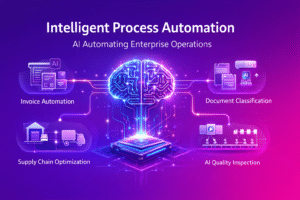
Traditional automation follows fixed rules, which limits flexibility. Machine learning systems, however, adapt to changing data and continuously improve workflow decisions.
Common enterprise automation scenarios include:
- Automated invoice processing
- Document classification systems
- Supply chain optimization
- Manufacturing quality inspection
For instance, manufacturing companies deploy computer vision models to inspect product defects on assembly lines. These systems analyze visual data in real time and identify quality issues faster than manual inspections.
This integration of AI in enterprise applications reduces operational delays, lowers labor costs, and improves consistency across business processes.
5️. Personalized Marketing and Recommendation Systems
Marketing departments increasingly rely on AI ML use cases in business to personalize customer experiences. Machine learning models analyze browsing behavior, purchase history, and engagement patterns to deliver targeted recommendations.
Recommendation engines are commonly used by e-commerce platforms, streaming services, and digital marketplaces. These systems continuously analyze user interactions and adjust recommendations accordingly.
Examples include:
- Product recommendation engines
- Personalized email marketing
- Dynamic pricing algorithms
- Customer segmentation models
Mini Scenario:
An online retailer implemented machine learning recommendation systems to personalize product suggestions. The algorithm increased average order value by suggesting complementary products based on customer behavior patterns.
These applications highlight how AI software development directly influences revenue growth by improving customer engagement and conversion rates.
6. AI-Powered Decision Intelligence
Decision intelligence platforms combine AI, analytics, and business data to support strategic decision-making. This category represents a sophisticated evolution of AI ML use cases in business, where AI models assist executives in evaluating complex scenarios.
Decision intelligence systems integrate data from multiple enterprise sources such as CRM systems, operational dashboards, and financial databases. Machine learning models analyze trends, identify correlations, and generate insights that guide leadership strategies.
Example use cases include:
- Sales performance forecasting
- Strategic resource allocation
- Market opportunity analysis
- Risk prediction models
For instance, logistics companies use machine learning to optimize route planning based on traffic patterns, fuel costs, and delivery deadlines. These insights improve operational efficiency while reducing costs.
By embedding AI into enterprise analytics platforms, organizations gain decision-support capabilities that were previously impossible using traditional data analysis.
7. Predictive Maintenance in Industrial Systems
Predictive maintenance is another powerful example of AI ML use cases in business, particularly in manufacturing, transportation, and energy sectors. Machine learning models analyze equipment sensor data to predict potential failures before they occur.
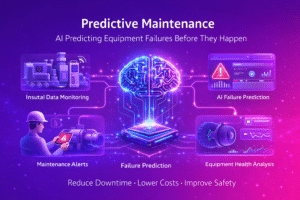
Traditional maintenance strategies rely on fixed schedules or reactive repairs. AI systems instead monitor operational data continuously and identify early warning signals indicating equipment degradation.
Key benefits include:
- Reduced downtime
- Lower repair costs
- Extended equipment lifespan
- Improved operational safety
Mini Scenario:
An airline implemented predictive maintenance models to monitor aircraft engine sensors. The system identified performance anomalies before failures occurred, preventing costly flight disruptions.
Predictive maintenance illustrates how machine learning business use cases translate technical insights into operational efficiency and financial savings.
ROI Comparison of Common AI Business Applications
AI Application Business Benefit Typical ROI Impact Predictive analytics Better forecasting accuracy Reduced operational waste Customer support AI Faster response times Lower support costs Fraud detection Financial risk reduction Prevented losses Process automation Operational efficiency Labor cost reduction Marketing personalization Increased conversion Higher revenue Decision intelligence Strategic insight Improved planning Predictive maintenance Reduced downtime Asset longevity
These applications illustrate why enterprises increasingly prioritize AI ML use cases in business within digital transformation strategies.
Conclusion:
Artificial intelligence is no longer an experimental technology within modern enterprises. Instead, organizations now integrate AI directly into operational systems to improve forecasting, automate processes, and enhance decision-making.
The most successful organizations focus on AI ML use cases in business that produce measurable outcomes rather than speculative innovation. By embedding machine learning capabilities into enterprise apps, companies transform data into strategic advantage.
As AI software development continues to evolve, new opportunities will emerge across industries. Businesses that invest in structured AI implementation — aligned with clear objectives and measurable metrics — will gain significant competitive advantages in the coming decade.
FAQ:
What are common AI ML use cases in business?
Common applications include predictive analytics, recommendation systems, fraud detection, intelligent automation, customer support chatbots, and predictive maintenance systems. These solutions help organizations improve operational efficiency and data-driven decision-making.
How does AI improve enterprise applications?
AI enhances enterprise applications by enabling automated decision-making, advanced analytics, and predictive insights. Machine learning models integrated into business software can analyze large datasets and identify patterns that improve operational performance.
Which industries benefit most from AI in enterprise applications?
Industries such as finance, healthcare, manufacturing, retail, logistics, and e-commerce widely adopt AI technologies to improve efficiency, automate processes, and optimize customer experiences.
Is AI implementation expensive for businesses?
AI implementation costs vary depending on complexity, infrastructure, and data requirements. However, organizations often achieve significant ROI through improved automation, reduced operational costs, and enhanced decision-making capabilities.